Freedom of Religion: Not Religious Oppression
I’ve seen and heard a lot of things as the Indiana State Constitution. However some of the things being said by the current Lieutenant Governor, Micah Beckwith, have me rolling in my display case. Let’s go over my Articles again, shall we, Becky?
During a town hall in Marion this July, Lt. Gov. Beckwith stated he wants to amend me—the Indiana Constitution—to require political candidates to profess a belief “in Judeo-Christian orthodoxy” before they can hold office. He claims this represents the “foundations of this nation” and wants to return to the religious oaths used in the first 13 states.
Let me be perfectly clear: I was specifically written in 1851 to prevent exactly that kind of government overreach.
Article I of my text is not ambiguous about the separation between faith and state power. Let’s look at the exact mechanism the delegates built to guarantee religious liberty for everyone, not just those who share the Lieutenant Governor’s specific theology.
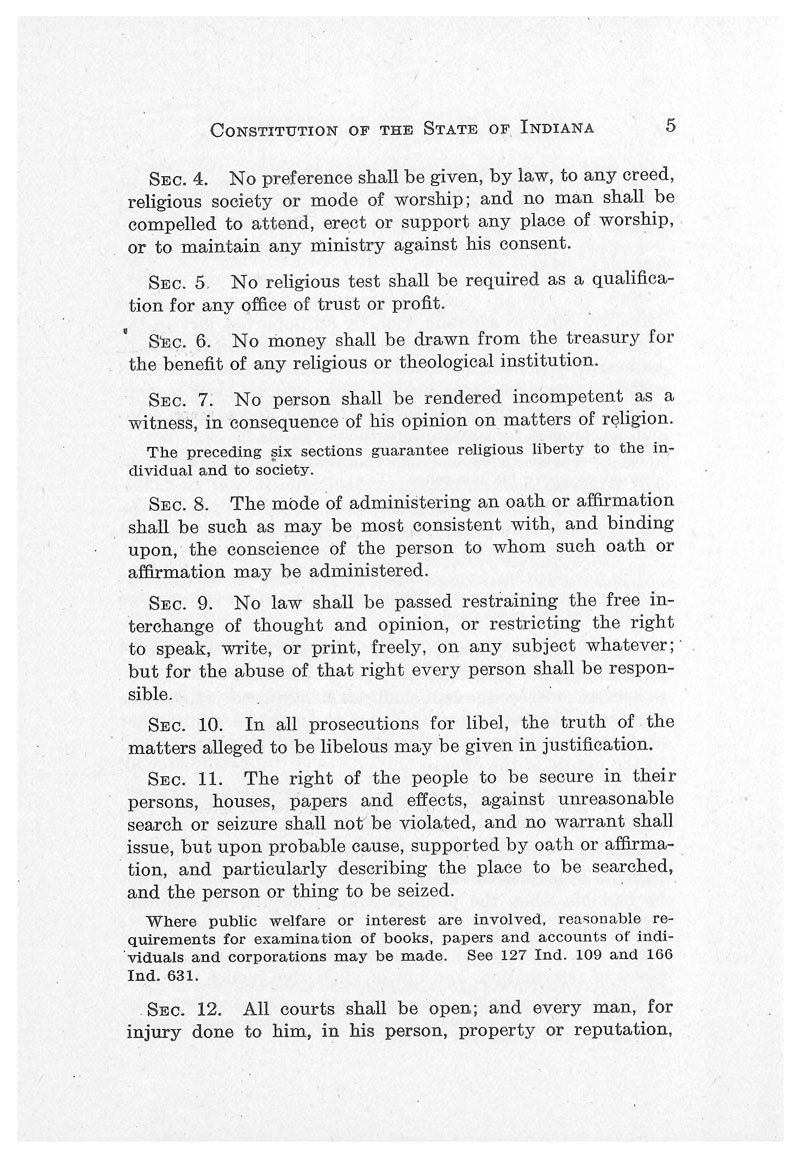
The Prohibition of Religious Tests
Beckwith’s desire for a “public declaration required, in Judeo-Christian orthodoxy, in order to hold office” is a direct violation of one of my most fundamental protections.
Article I, Section 5 explicitly states:
“No religious test shall be required, as a qualification for any office of trust or profit.”
This wasn’t an accident. The founders of this state understood that the moment the government is allowed to determine which religious beliefs are “acceptable” for public service, true religious freedom dies. You cannot mandate a Judeo-Christian oath without violating the core principle that public office is open to all citizens, regardless of how they worship—or if they worship at all.
The Ban on State Preference
Beckwith, who openly identifies as a Christian nationalist, has also stated that faith should be “more openly integrated into governance” and has even argued that society should be willing to “hate ideas they view as evil,” explicitly targeting Islam in recent months.
However, Article I, Section 4 firmly closes the door on the state endorsing or elevating any specific religious worldview over another:
"No preference shall be given, by law, to any creed, religious society, or mode of worship; and no person shall be compelled to attend, erect, or support, any place of worship, or to maintain any ministry, against his consent."
When a state official uses their platform to suggest the Christian values should dictate the law, they are attempting to establish the very “preference” that Section 4 strictly forbids. True religious liberty means the state cannot compel anyone under the moral framework of a specific religion.
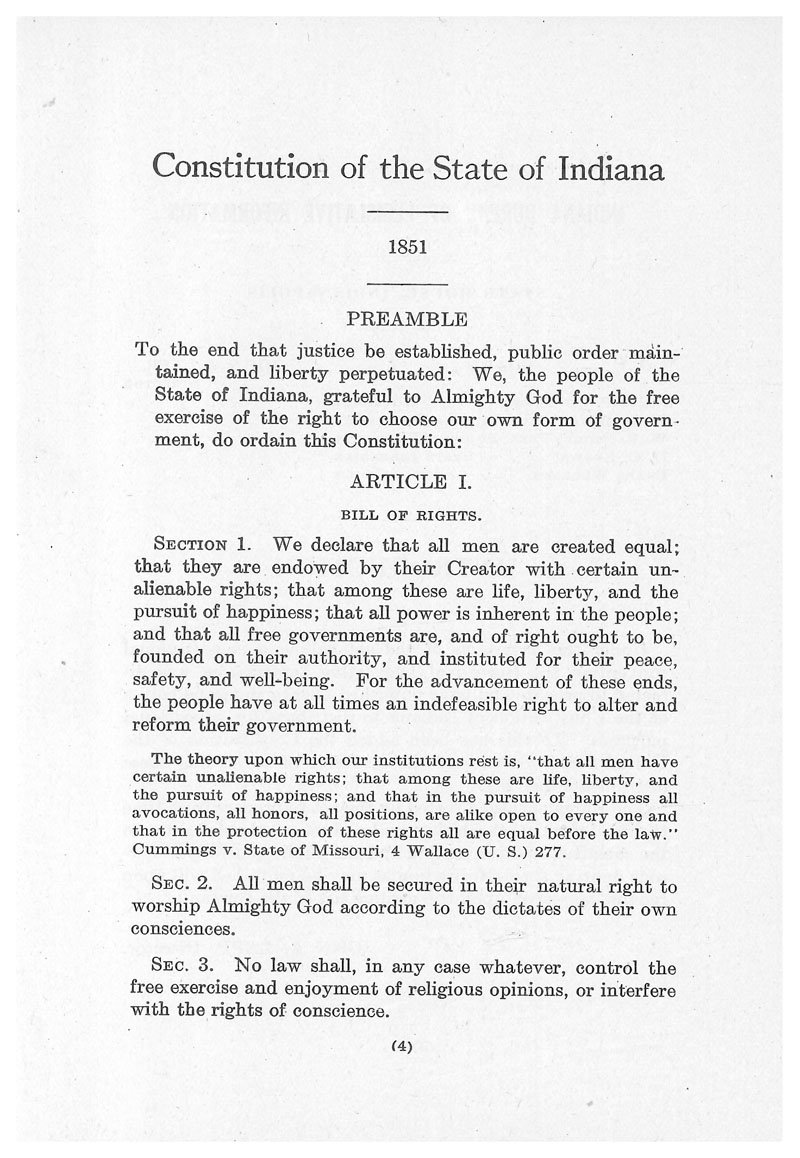
The Freedom of Conscience
Finally, Article I, Section 3 is the ultimate firewall against the kind of state-mandated morality Beckwith is pushing:
"No law shall, in any case whatever, control the free exercise and enjoyment of religious opinions, or interfere with the rights of conscience."
When you attempt to rewrite the rules of governance to favor a specific religious orthodoxy, you inherently interfere with the rights of conscience of everyone who does not share that orthodoxy.
I was designed to be a shield for the people against government overreach. I am not a sword to be wielded by Christian nationalists to impose their specific worldview on the diverse citizens of Indiana.
So let’s get one thing straight, Becky: my ink has been dry for 175 years, and it outranks whatever theocratic fever dream you are trying to push. You don't get to overwrite the foundational liberties of this state just because you’d rather have a pulpit instead of a public office. So, on behalf of the actual law of the land: fuck you. Read my Articles, do your actual job, and leave my sections alone.
Sources
[1] Constitution of the State of Indiana. (1851). Article I, Section 5: Religious Test for Office.
[2] Constitution of the State of Indiana. (1851). Article I, Section 4: Freedom of Religion.
[3] Constitution of the State of Indiana. (1851). Article I, Section 3: Freedom of Religious Opinions and Conscience.
[4] Public remarks and town hall records, Lt. Gov. Micah Beckwith. (July 2026). Statements regarding "Judeo-Christian orthodoxy" and proposed constitutional amendments for public office qualifications.
[5] Beckwith, Micah. Public statements and campaign platforms regarding Christian Nationalism, the integration of faith and governance, and cultural policies.
