Greed, Avarice, and the History of Violence
Hoosier history is writhe with tales of the greed of men, their avarice, and the death and destruction it left behind. When we say that greed is violence, it’s not just an abstract play on words. Greed and avarice are at the core of every drop of blood shed for the pursuit of profits. Let’s dive into the grotesque history of what wealthy men will do, in order to make another dollar.
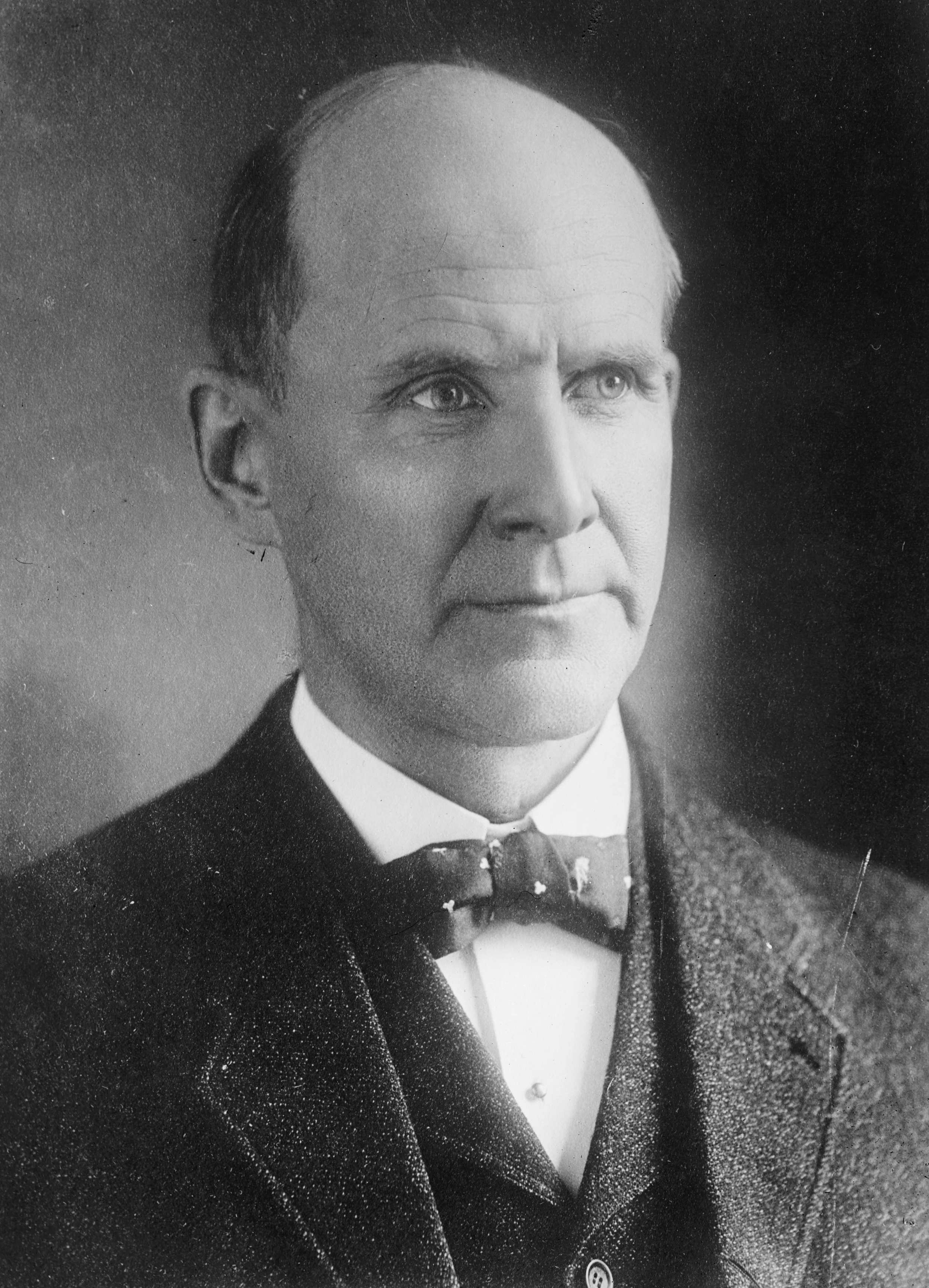
By Unknown author - Bain News Service via the Library of Congress, Public Domain, https://commons.wikimedia.org/w/index.php?curid=84226262
The Pullman Squeeze and the Machinery of Suppression
Before the turn of the 20th century, the American working class was learning a brutal lesson: the law protected property, but it rarely protected people. This was nowhere more evident than in the fight between Terre Haute’s own Eugene V. Debs and the railroad monopolies.
As the founder of the American Railway Union (ARU), Debs sought to bring together all railway workers into a single, massive industrial union to counter the unchecked power of the railroad barons. That power clash came to a head during the 1894 Pullman Strike, an event that exposed the exact playbook corporations used to bust union—a coordinated assault utilizing corporate collusion, weaponized courts, and state-sanctioned violence.
The Company Town Racket
This violence of the Pullman Strike didn’t begin with weapons, but with greed. George Pullman operated a “utopian” company town south of Chicago, where he owned the homes, the stores, and the utilities. When the economic Panic of 1893 hit, Pullman protected his profit margins by slashing his workers’ wages by 25%. However, he flatly refused to lower the exorbitant rents he charged them.
Workers were forced to go hungry to subsidize corporate dividends. When the desperate workers walked out in May 1894, Debs and the ARU launched a massive sympathy boycott, with over 125,000 railway workers nationwide refusing to handle any train carrying a Pullman car.
To break Debs and the ARU, capital deployed a four-pronged counter-offensive:
Corporate Collusion (The General Managers’ Association): The ARU wasn’t just fighting George Pullman; they were fighting a cartel. The railroads coordinated their retaliation through the General Managers’ Association (GMA), a coalition of 24 railroad lines. The GMA intentionally escalated the crisis by firing any switchman who refused to handle Pullman cars, knowing it would provoke further walkouts and paralyze the national economy.
Sabotaging the Mail: In a brilliant but entirely cynical tactical move, the GMA began intentionally attaching Pullman sleeper cars to U.S. mail trains. By doing so, any union worker refusing to move a Pullman car was suddenly committing a federal crime by obstructing the United States postal service.
The Weaponized Injunction: The federal government actively colluded with the railroads. U.S. Attorney General Richard Olney—a former railroad lawyer himself—used the delayed mail as a pretext to secure a sweeping federal injunction against the ARU. Utilizing the Sherman Antitrust Act—a law designed to break up corporate monopolies—Olney ironically turned it against the workers, making it entirely illegal for Debs or union leadership to even communicate with the strikers.
State-Sanctioned Violence: When the injunction alone failed to break the workers' solidarity, capital called in the military. At the behest of the railroads, President Grover Cleveland dispatched thousands of federal troops to crush the strike, bypassing the fierce objections of Illinois' governor. The arrival of the military turned a labor dispute into a war zone. Troops fired into crowds, resulting in the deaths of dozens of citizens in the ensuing street battles.
Capital won the battle. The strike was broken, the workers were blacklisted by the railroads, and Debs was thrown into federal prison for six months for violating the injunction. But the Pullman Strike laid bare a dark truth about American industry: when corporate avarice was threatened by organized workers, the government would gladly supply the violence necessary to protect the bottom line.
The Coal Fields: Profits, Strikes, and the Inevitable Collapse
As the railroad monopolies were busy weaponizing the federal government above the ground, an entirely different breed of corporate avarice was digging into the earth in Southwestern Indiana. The early 20th century saw a massive boom in Indiana coal, but the wealth extracted from the state’s subterranean veins rarely reached the men swinging the pickaxes.
Indiana’s coal seams were notoriously difficult to mine. Many were incredibly narrow—sometimes less than four feet thick—forcing men to work 10-to-12-hour shifts bent double or entirely on their knees. The physical toll was only secondary to the environmental hazards faced. Methane gas naturally bleeds from coal seams, and the grinding of the rock produces highly combustible coal dust.
To the miners, survival required strict safety protocols: robust ventilation systems to clear the methane, and regular “rock-dusting” (spraying crushed limestone to neutralize the explosive coal dust). To the mine operators, however, these safety measures were viewed as completely optional expenses that cut into their bottom line.
Striking to Survive
The United Mine Workers of America (UMWA) repeatedly clashed with Indiana mine operators, launching strikes not merely for fair wages, but for the basic right to survive their shifts. During the massive nationwide coal strikes of the early 1920s, Indiana operators fought bitterly to maintain total control over their mines, often importing scab labor and utilizing armed mine guards to break the picket lines.
The operators’ persistent refusal to invest the profits back into mine safety created a ticking time bomb. The strikes were a desperate warning, but corporate greed ensured the warning was ignored. The inevitable result wasn’t just an accident; it was a mathematical certainty. Don’t fuck with Murphy and his Law.
The 1925 City Mine Disaster
It was on February 20, 1925, when the bill for that negligence came due in Sullivan, Indiana. Inside the City Coal Mine, a lethal accumulation of methane gas and unmitigated coal dust found a spark.
The resulting explosion was so dramatic, so catastrophic that it completely collapsed sections of the mine roof, trapping the men underground in total darkness. Only, the blast itself wasn’t the only killer. The explosion consumed the oxygen in the shafts, replacing it with “afterdamp”—a toxic, suffocating mixture of carbon monoxide and nitrogen.
When the dust finally settled, 51 miners were dead, making it the deadliest mine disaster in Indiana history. The recovery effort was a nightmare all on it’s own. Rescue crews, heavily reliant on the same working-class solidarity the corporations tried to crush, had to dig by hand through collapsed rock, twisted steel, and intense heat just to retrieve the crushed, burned, bodies of their brothers.
The Sullivan disaster was not an unpredictable act of the Divine. It was a direct, physical manifestation of greed. The operators knew the risks of poor ventilation and ignored them to save a dollar, effectively deciding that paying for dead miners was cheaper than paying to keep them alive.
General Motors and the Corporate Vigilante
As the decades passed and the American industrial machine evolved from the soot-choked coal mines to the the gleaming assembly lines of the automotive boom, the tactics of corporate suppression evolved right alongside it. By the 1930s, the battle ground had shifted from the subterranean depths of the factory floor, but the core motivation remained the same: the absolute protection of profits at the expense of human life and dignity.
In Indiana, this era proved that when the state and the courts were no longer enough to break a labor movement, corporations were more than willing to fund and direct their own localized civil wars.
The Anderson UAW Strikes
By 1937, the United Auto Workers (UAW) were gaining momentum nationwide, famously paralyzing General Motors with the Flint sit-down strikes in Michigan. That spark of organized resistance quickly spread south to Anderson, Indiana, a quintessential “company town” where GM dominated the local economy through its massive Delco-Remy and Guide Lamp plants, employing upwards of 11,000 Hoosiers.
Workers at the Anderson plants demanded union recognition, fair wages, and relief from a punishing assembly line speed-up system that treated human beings as disposable machine parts. In response, General Motors didn’t just say no—they actively mobilized a private army.
The Citizens League for Industrial Security
Rather than sitting down and negotiating, GM executives and allied local business owners whipped the city into an anti-union frenzy. They orchestrated the creation of the “Citizens League for Industrial Security,” a thinly veiled mob funded and directed by corporate interests. Foremen and plant managers aggressively pressured non-union workers to join the League and sign “back-to-work” petitions, effectively forcing employees to choose between their livelihoods and their community solidarity.
This was greed adopting a psychological weapon: pitting the working class against itself to protect the executives’ bottom line.
The Mob Descends
The tensions finally reached a climax in late January 1937, when the corporate-backed mob finally unleashed its violence. Thousands of anti-union vigilantes, armed with clubs, iron bars, and whatever else they could scavenge, marched on the UAW headquarters at the local Crystal Tavern.
They shattered the windows, brutally beat the union organizers trapped inside, and effectively seized control of the streets. The local police, highly sympathetic to GM’s economic stranglehold on the town, either stood idly by or actively colluded with the vigilantes. The violence grew so severe and uncontrollable that the Indiana governor was forced to declare martial law in Madison County, deploying the National Guard to restore order.
The Anderson strikes tore the mask off the “modern” corporation. General Motors proved that they were perfectly willing to tear a community apart, arm neighbors against neighbors, and plunge an entire city into violent chaos, so long as it kept the assembly lines running and the union out. It was a stark reminder that corporate avarice know no bounds, and that the history of American industry is written in the bruises and blood of the workers who dared to ask for their fair share.
The Slow Violence of the Modern Era
The Pinkertons may be long gone, and the state may no longer deploy the National Guard to crush picket lines with bayonets, but do not mistake the absence of a riot for the presence of peace. The violence of corporate avarice hasn’t disappeared from Indiana; it has simply changed its operational timeline. Today, we are subjected to a slow violence—an invisible, systemic assault on our air, our water, and the very soil beneath our feet.
The Legacy of Ash
The coal barons of the 1920s left us with collapsed mines and shattered families. Their modern successors have left us with something far more insidious: millions of tons of toxic coal ash.
Across Indiana, the byproduct of burning coal for cheap power sits in massive, unlined, and uncapped dump sites. Because the utility industry fought tooth and nail against regulations that would require them to safely store, line, or cap these hazardous pits, heavy metals like arsenic, mercury, and lead are continuously leaching directly into our groundwater. The corporations saved a fortune in disposal and cleanup costs by leaving these sites exposed to the elements. In exchange, everyday Hoosiers are left to drink the poison.
The Modern Ledger
This isn’t an isolated oversight, it is the standard operating procedure for modern corporate extraction. The same avarice that refused to ventilate the City Coal Mine in 1925 now lobbies to weaken environmental protections. It fights against the remediation of industrial brownfields, allows agricultural and manufacturing runoff to choke our waterways, and permits the smog of deregulation to settle over our cities. The boardroom executives calculate the cost of state fines for illegal dumping versus the cost of doing it right, and consistently decide that paying the fine—and polluting our communities—is the more profitable choice.
When corporation taints a town’s water supply to protect shareholder dividends, causing elevated cancer rates and chronic illness a decade later, that is not a bureaucratic error. It is a calculated casualty. It is an act of aggression.
History tells us a singular, undeniable truth: greed is violence. Whether it is a collapsed mine roof in Sullivan, a vigilante mob in Anderson, or the quiet, toxic seepage from an uncapped ash pond today, the root cause is exactly the same. The relentless pursuit of profit at the expense of human life has always been the greatest threat to our communities. It is time we recognize this slow violence for what it is, and demand an end to the era where our health, our homes, and our lives are treated as nothing more than acceptable losses on a corporate balance sheet.
References
Part I: The Pullman Squeeze and the Machinery of Suppression
1. Lindsey, Almont. The Pullman Strike: The Story of a Unique Experiment and of a Great Labor Upheaval. Chicago: University of Chicago Press, 1942.
2. Salvatore, Nick. Eugene V. Debs: Citizen and Socialist. Urbana: University of Illinois Press, 1982.
3. Papke, David Ray. The Pullman Case: The Clash of Labor and Capital in Industrial America. Lawrence: University Press of Kansas, 1999.
Part II: The Coal Fields: Profits, Strikes, and the Inevitable Collapse
4. Indiana Historical Bureau. "City Coal Mine Disaster." State Historical Marker Review and Documentation, Sullivan County.
5. United States Bureau of Mines. Historical Mine Disasters. Bulletin detailing the February 20, 1925, City Mine explosion and afterdamp fatalities.
6. Madison, James H. Indiana Through Tradition and Change: A History of the Hoosier State and Its People, 1920-1945. Indianapolis: Indiana Historical Society, 1982. (Used for general context on 1920s labor conditions and strikes in Indiana).
Part III: General Motors and the Corporate Vigilante
7. Fine, Sidney. Sit-Down: The General Motors Strike of 1936-1937. Ann Arbor: University of Michigan Press, 1969.
8. Geier, Max G. "The 1937 Anderson GM Strike and the Citizens League for Industrial Security." Indiana Magazine of History (Archival records regarding the martial law declaration in Madison County).
9. Madison, James H. Indiana Through Tradition and Change: A History of the Hoosier State and Its People, 1920-1945. Indianapolis: Indiana Historical Society, 1982.
Part IV: The Slow Violence of the Modern Era
10. Hoosier Environmental Council. "Coal Ash in Indiana: The Toxic Legacy." Public reports and environmental tracking on groundwater contamination at state CCR (Coal Combustion Residual) sites.
11. Earthjustice. "Mapping the Coal Ash Contamination." Environmental tracking data on unlined and uncapped coal ash pits across Indiana waterways and aquifers.
12. United States Environmental Protection Agency (EPA). Hazardous and Solid Waste Management System; Disposal of Coal Combustion Residuals from Electric Utilities. (Federal registry data regarding the lack of required liners for legacy ash ponds).
