Out With the Old: In With the New
In the heart of Indiana, our history is often written not in textbooks, but in the charred foundations of our city centers. We look at the modern landscape - the sleek lofts, the repurposed brick facades, the vibrant riverfronts - and we often forget the smoke that cleared the way for this progress.
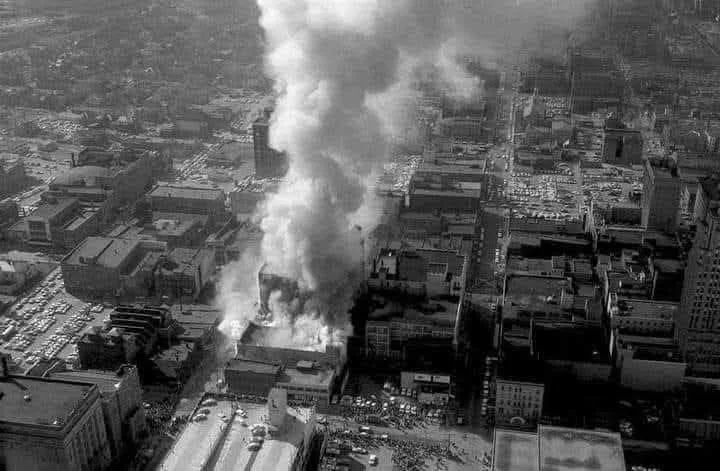
The fire that consumed several buildings of the Wolf and Dessauer Department Store. 63 years ago, February 10, 1962.
The Architecture of Trauma
The history of Indiana is punctuated by major conflagrations that did more than destroy property; they reshaped the very DNA of our urban environments. From the devastating 1962 Wolf & Dessauer fire in Fort Wayne to the historic 1890 Bowen-Merrill disaster in Indianapolis, these fires acted as brutal agents of urban renewal.
"When official archives are silent about a community's lived trauma, the physical landscape itself - the buildings that remain gutted, the architecture of the reconstruction - becomes the primary source material."
A Cycle of Renewal
We often tell a story of natural economic progression. But when you look closely at specific sites - The Wolf & Dessauer Complex, the plots near the Promenade - a different pattern emerges. Fires created the "vacant" spaces that allowed developers to bypass historic preservation and implement rapid modernization. The "new" is almost always built directly on top of the "old," frequently with little acknowledgement of the destruction that made the vacancy possible. It’s just easier to develop when you can rip down what was once there without consequence. Most lay abandoned and rotting for years if not decades before being redeveloped.
The Archive Beneath the Surface
As independent researchers, our role is to act as the archivists of these physical scars. By mapping these sites and documenting the transition from fire to foundation, we construct a counter-narrative to the standard urban renewal story. We are not just documenting fires; we are documenting the intentional reconstruction of Indiana's identity, one building at a time. As one thing fades, another rises. Like a phoenix from the ashes.
