PRIDE Will Never Die
This story doesn’t start in Indiana, but it did lead to what we have seen grow and flourish across our state to this day every single June and July. PRIDE was a movement of organization that took place after the events of at the Stonewall Inn 1969.
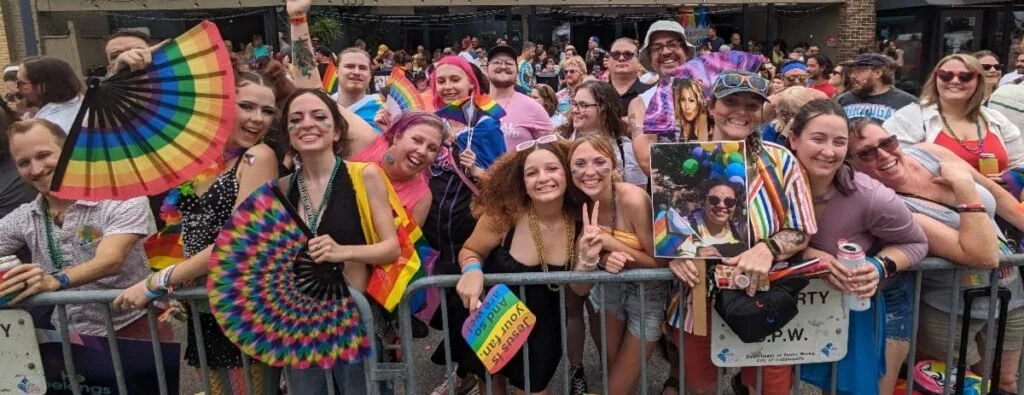
Indianapolis Pride Parade 2024 - Courtesy: Episcopal Diocese of Indianapolis
The Stonewall Catalyst
The events surrounding the Stonewall Inn during the month of June 1969, were not just a singular protest; they were a earthshaking rupture in the social fabric. For the first time on a national stage, the routine acceptance of harassment was met with a collective, resounding “no.” While the rebellion took place in New York City, it served as a mirror for the LGBTQ+ community across the United States. It signaled that the silenc that had defined queer life in the mid-20th century was no longer a requirement for survival.
From Rumor to Organization in Indiana
The shockwaves from 1969 did not result in an overnight revolution in Indiana, but they did push forward a critical, long-term shift from underground social circles to formal community building. In the city centers like Indianapolis, Fort Wayne, and eventually Bloomington, the post Stonewall era catalyzed movement in several key ways:
The Transformation of "Safe Spaces": Previously, bars were the only places where the community could gather, albeit in constant fear of raids or police intervention. Post-Stonewall, these spaces began to evolve from purely social outlets into the first nodes of communication, where individuals began the dangerous work of exchanging information and organizing.
The Rise of Local Infrastructure: Following the national momentum, Indiana saw the birth of grassroots media. Gestetner-copied newsletters and pamphlets began appearing in universities and independent bookstores. These humble publications were the first archival records of the community defining itself as a cohesive political constituency rather than a collection of isolated, hidden individuals.
Campus Activism as a Gateway: The intellectual density of university towns and the anonymity of growing urban metros provided safe harbor for the first formal organizations. Student groups and fledgling social clubs began to emerge, formalizing their existence in a way that was previously unimaginable.
All of these early efforts were a direct precursor to the modern, robust networks we have today. The activists who took these first steps were the architects of the legal, health, and social support systems that define Indiana’s current LGBTQ+ advocacy landscape. The knew, as we know today, that if rights were not going to be granted, they had to be systematically built.
The Spirit of Organization
After the 1969 Stonewall Uprising, Indiana began it’s own shift toward formal advocacy. The movement found early roots on college campuses and in urban centers, where the need for visibility an mutual aid became impossible to ignore:
Bloomington: In the spring of 1970, the Bloomington Gay Liberation Front (BGLF) began organizing, eventually holding its first public meeting that August. While initially radical in its approach, the group eventually transitioned into the Bloomington Gay and Lesbian Alliance by 1973, pivoting toward social services and community support.
Fort Wayne: Local efforts were sustained by early groups like the Gay/Lesbian Organization (GLO) and initiatives like the "Up The Stairs" community center, which maintained vital newsletters such as TROIS and The Rainbow to keep the community connected.
We Keep Moving Today
Since history is fluid and always being wrote, and since the history has been brief. We meet at the modern day. The legacy of those early organizers lives on through diverse, statewide networks that continue to evolve despite a complex political environment.
Community Anchors: Modern hubs like The LGBTQ Center in Northern Indiana and the Fort Wayne Pride Center offer wide-ranging support, from youth groups and social gatherings to mental health and arts programming.
Persistent Advocacy: Groups like the ACLU of Indiana remain at the forefront of the fight, litigating for equal protection in housing, employment, and public services, while ensuring that Pride celebrations can continue even in the face of local government resistance.
A Growing Landscape: As of 2025, there are over 40 Pride events held annually across Indiana. While organizers report navigating increased political pushback and challenges with funding, the vast majority note that community attitudes have improved and visibility continues to grow, ensuring that the movement started in 1969 remains a vibrant, ongoing force.
This article is part of The Archives series. As we continue to document Indiana's complex history, we remember that every chapter of our state’s story is written by those brave enough to speak their truth.
References:
Bloomington Gay Liberation Front (BGLF) Bloomington Gay Liberation Front (BGLF). Organizational Records and Meeting Minutes, 1970–1973. Indiana University Archives, Bloomington, IN.
Fort Wayne Community Publications Fort Wayne Gay/Lesbian Organization (GLO). TROIS Newsletter, Jan. 1980–Feb. 1987. Indiana LGBTQ+ Historical Archives.
Up The Stairs Community Center. The Rainbow Publication, Jul. 1997–Feb. 2008. Indiana LGBTQ+ Historical Archives.
American Civil Liberties Union of Indiana American Civil Liberties Union of Indiana. "Legal Dockets and Historical Case Files: LGBTQ+ Rights." ACLU of Indiana Archives, Indianapolis, IN.
